Voluntary Water Conservation

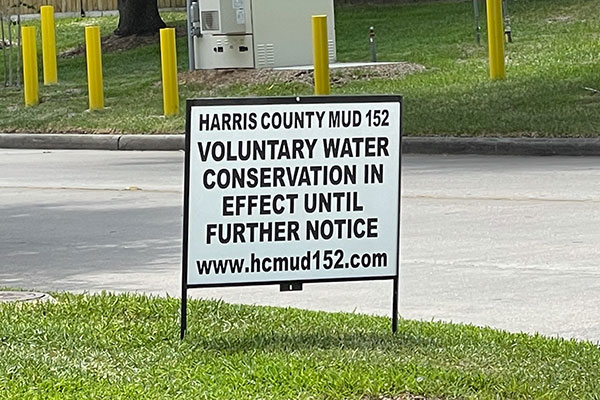
MUD 152 is joining MUDs across Texas in implementing a voluntary water conservation notice for the district. Given the current dry conditions across our area, it is important for homeowners to think about ways to reduce their water usage. Water conservation experts suggest among other approaches, reducing the time spent in the shower, washing only fully loaded washing machines, waiting until the dishwasher is fully loaded before turning it on, and watering your lawn on a more limited basis.

By |2024-01-14T21:40:13-06:00July 21st, 2022|

Hurricane Preparedness 2022

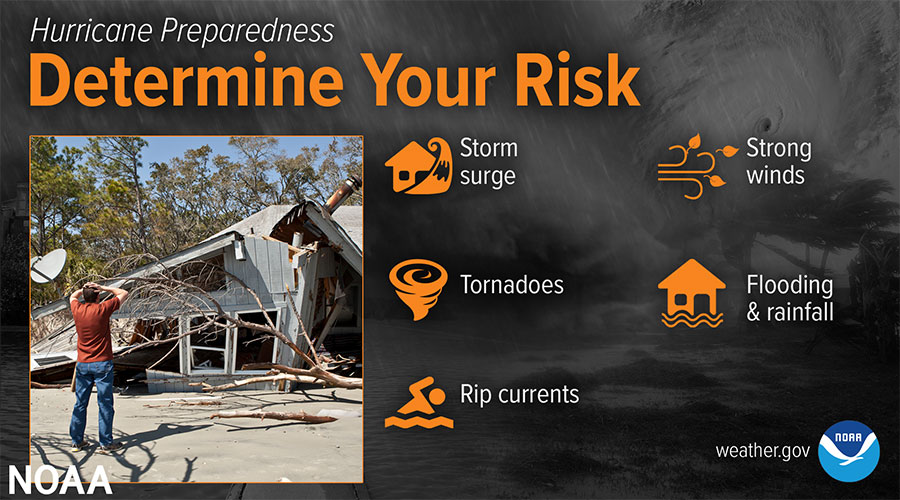
Be ready for hurricane season. Today you can determine your personal hurricane risk, find out if you live in a hurricane evacuation zone, and review/update insurance policies. You can also make a list of items to replenish hurricane emergency supplies and start thinking about how you will prepare your home for the coming hurricane season. If you live in hurricane-prone areas, you are encouraged to complete these simple preparations before hurricane season begins on June 1.


Find out today what types of wind and water hazards could happen where you live, and then start preparing how to handle them. Hurricanes are not just a coastal problem. impacts from wind and water can be felt hundreds of miles inland, and significant impacts can occur regardless of the storm’s strength. Know if you live in an area prone to flooding and if you’re safe to remain in your home.


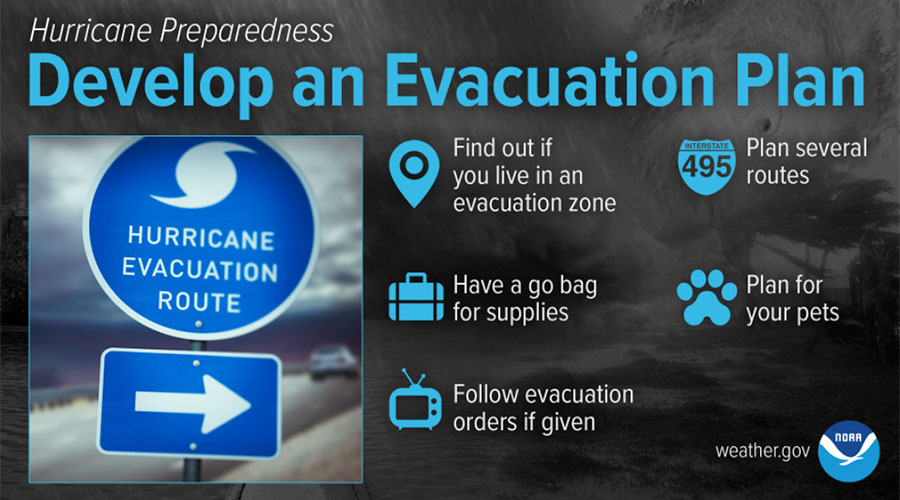
Find out if you live in a hurricane evacuation zone. You may also need to leave if you live in a flood prone area or in a mobile home outside a hurricane evacuation zone. Now is the time to begin planning where you would go and how you would get there.

You do not need to travel hundreds of miles. Your destination could be a friend or relative who lives in a well built home outside flood prone areas. Remember, your safest place may be to remain home. Be sure to account for your pets in your plan.

As hurricane season approaches, listen to local officials on questions related to how you may need to adjust any evacuation plans based on the latest health and safety guidelines from the CDC and your local officials.


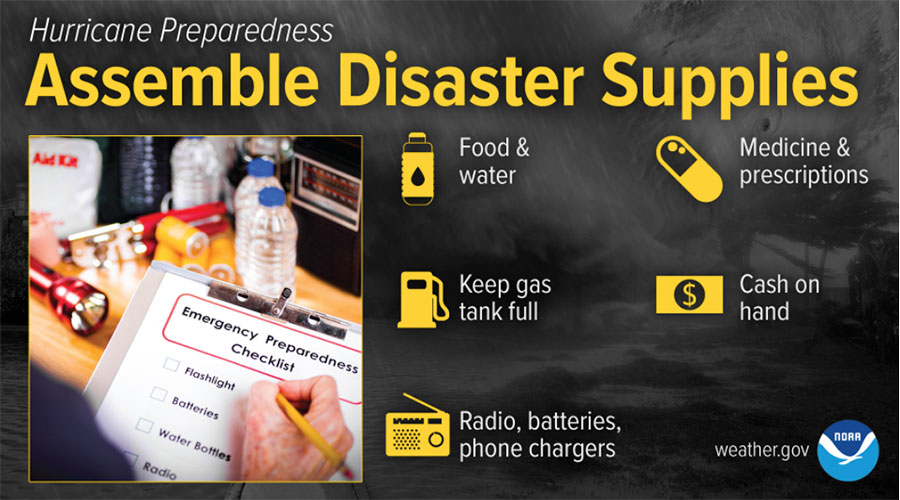
Whether you’re evacuating or sheltering-in-place, you’re going to need supplies not just to get through the storm but for the potentially lengthy and unpleasant aftermath. Have enough non-perishable food, water and medicine to last each person in your family a minimum of 3 days (store a longer than 3-day supply of water, if possible). Electricity and water could be out for at least that long. You’ll need extra cash, a battery-powered radio and flashlights. You may need a portable crank or solar-powered USB charger for your cell phones.

If you need to go to a public shelter, follow health guidelines from your local officials and the CDC.


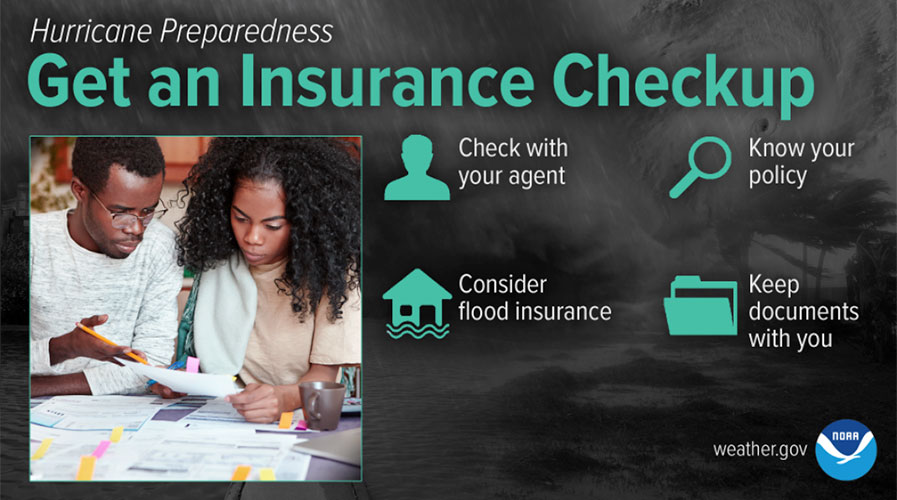
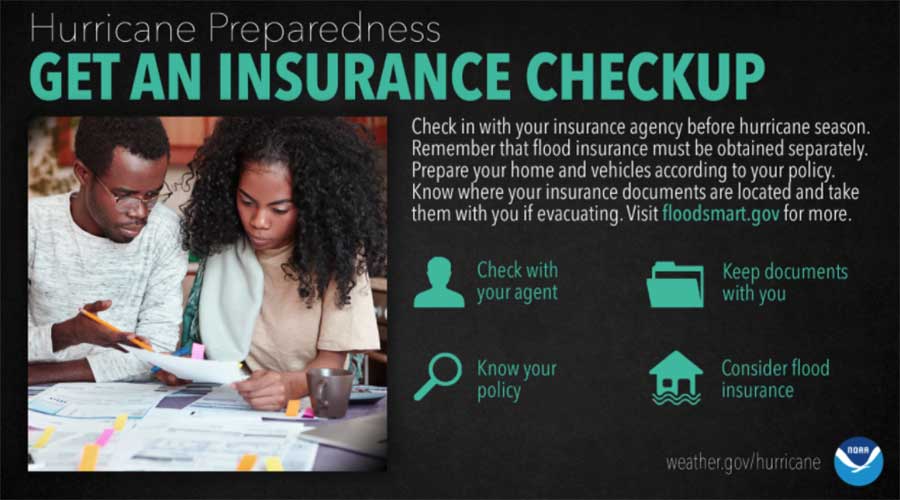
Call your insurance company or agent and ask for an insurance check-up to make sure you have enough insurance to repair or even replace your home and/or belongings. Remember, home and renters insurance doesn’t cover flooding, so you’ll need a separate policy for it.

Flood insurance is available through your company, agent, or the National Flood Insurance Program at floodsmart.gov. Act now, as flood insurance requires a 30-day waiting period.


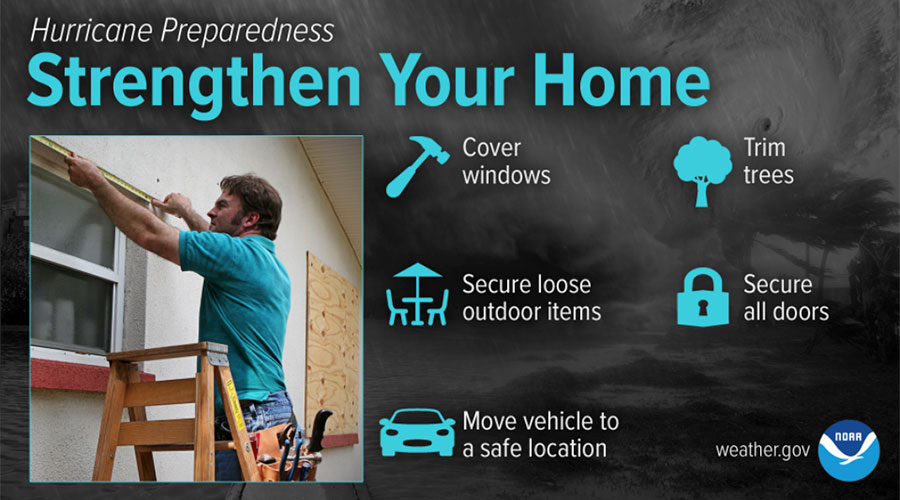
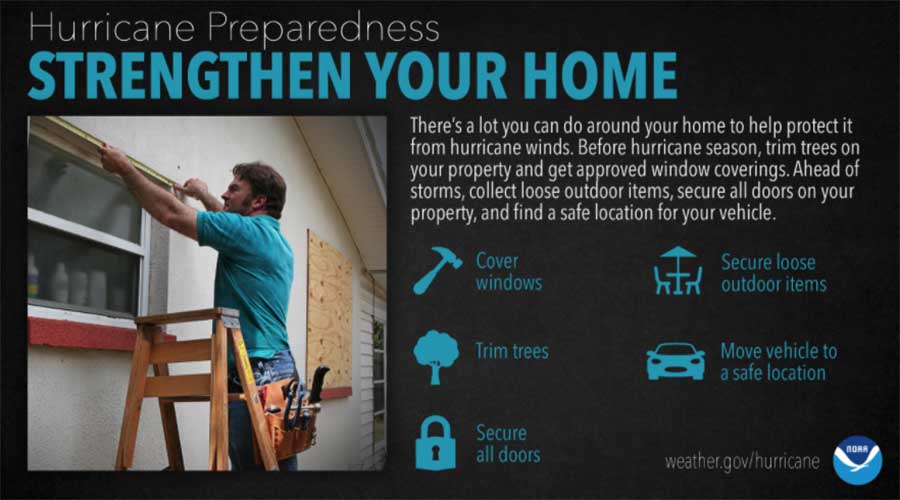
Whether you’re evacuating, or planning to ride out the storm in your home, make sure it is in good repair and up to local hurricane building code specifications to withstand wind impacts. Many retrofits are not as costly or time consuming as you may think.

Have the proper plywood, steel or aluminum panels to board up the windows and doors. Remember, the garage door is the most vulnerable part of the home, so it must be able to withstand the winds.

If you’re a renter, work with your landlord now to prepare your home for a storm.


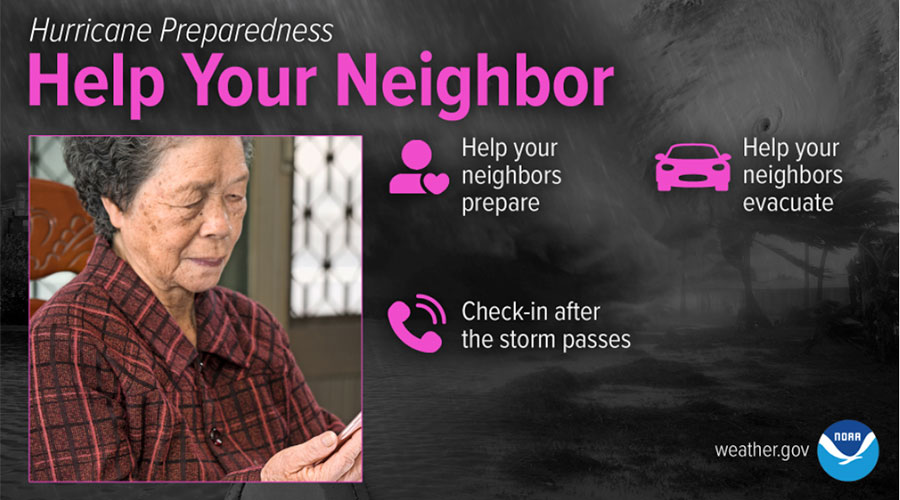
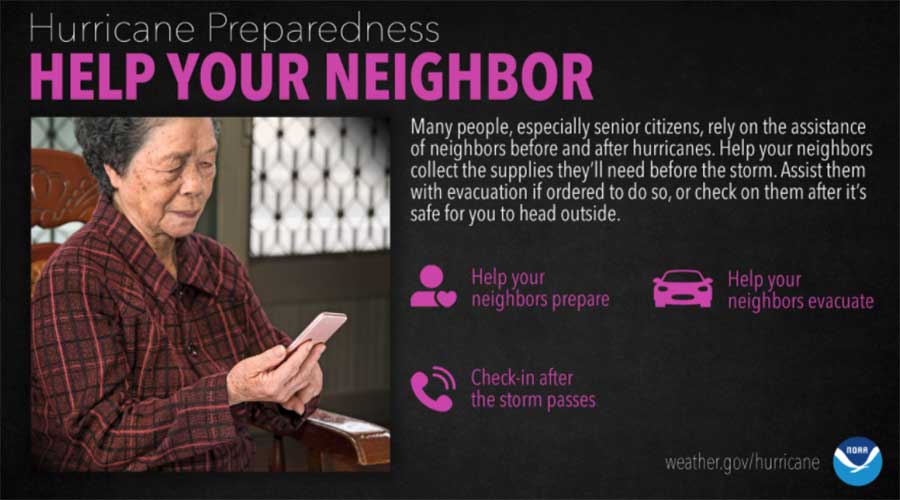
Many people rely on their neighbors before and after a disaster, and there are many ways you can help them. Learn about all the different actions you and your neighbors can take to prepare and recover from the hazards associated with hurricanes.

Start the conversation now with these Neighbor Helping Neighbor strategies but remember you may need to adjust your preparedness plans based on the latest health and safety guidelines from the CDC and your local officials.


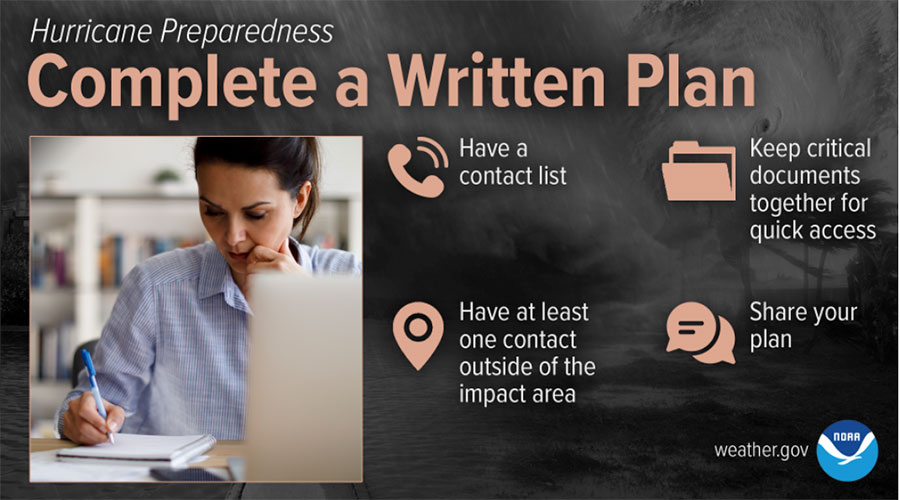
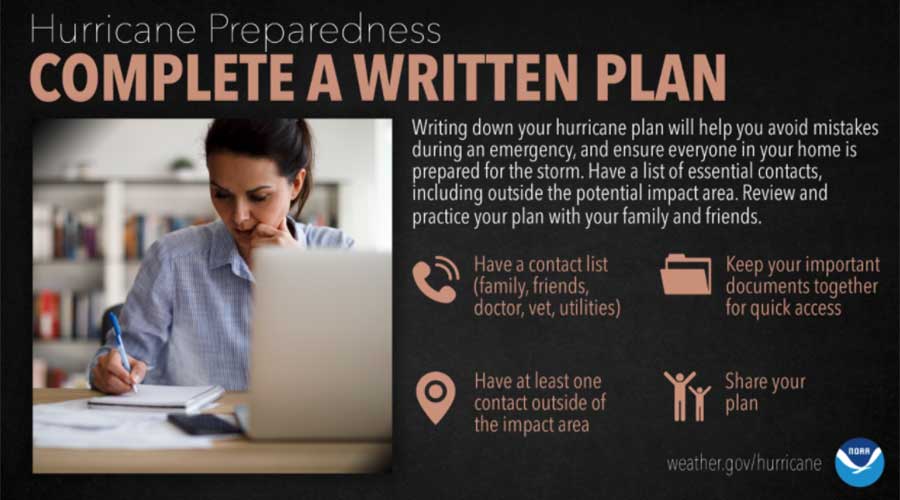
The time to prepare for a hurricane is before the season begins, when you have the time and are not under pressure. If you wait until a hurricane is on your doorstep, the odds are that you will be under duress and will make the wrong decisions.

Take the time now to write down your hurricane plan. Know who issues evacuation orders for your area, determine locations on where you will ride out the storm, and start to get your supplies now. Being prepared before a hurricane threatens makes you resilient to the hurricane impacts of wind and water. It will mean the difference between being a hurricane victim or a hurricane survivor.

By |2022-05-14T22:27:14-05:00May 11th, 2022|

Leaks Can Run- But They Cannot Hide

Drip, Drip, Drip…Let’s Talk Leaks!

Guess what! National Fix A Leak Week is March 14-20th and we want to be sure you have the best resources to keep you informed of the little problems caused by water leaks. Awareness of what to look for and knowledge of how to fix any leak issues can go a long way in prevention and saving money. Leaks can run, but they can’t hide!


Did you know that simple faucet leaks amount to approximately 1 trillion gallons of water wasted each year? That’s huge! And so easily preventable! Not to mention, leaks are costly. Taking time each year to perform a preventative check, can help keep your check book in order.
When you are on the hunt for possible leaks, it is important to start with the data… Begin with your water bill, check your meter, and test your toilets. These will give you some clue as to the prevalence of a water leak in your home.

The EPA recommends the following checklist for tracking down a leak! Here are some of the best-known hiding places to start. Keep your ears open!
  • Bathroom
    • Toilets
    • Faucets
    • Showerheads
    • Under the sink
    • Don’t forget the tub!
  • Laundry Room
    • Check all of your hook-ups!
    • Look for pooling in the washer itself (it could indicate a source leak)
  • Kitchen
    • Check all appliances, such as the dishwasher and fridge. Many times, there are leaks behind them.
  • Basement and Garage
    • Sinks
    • Exposed pipes
    • Water Heaters
  • Outside
    • Spigots
    • Irrigation controls and sprinkler heads

Well, that all depends on your plumbing skills. Whether you choose to call in a professional or venture down the DIY path, below are a few steps everyone should take… just in case.

  1. Turn off the water line to the leaking location.
  2. Identify the primary source of the leak.
  3. Document any and all damage (date, time, photos, description, etc.).
  4. If necessary, call your insurance company.
  5. Call in the professionals or DIY to fix any damage caused by the leak.
  6. Look for any secondary impacts caused by the leak, such as mold or mildew.

It’s important that everyone learn the ins and outs of their plumbing system to avoid costly repairs or surprise damages. Not only does it help protect your home and family, but you also help reduce any wasteful impacts to our water sources.
Enjoy Fix a Leak Week! Best of luck to all you DIY’ers!

Article Sources

Detect and Chase Down Leaks With Watersense
EPA- Fix a Leak Week
Home is Being Destroyed- Act Now.
How To Find Water Leaks In Your Home’s Plumbing
Dangers and Causes of Hidden Water Leaks in the House

Want to Learn More?

EPA- At Home Activity
Home Water Works
YouTube ~ Just search “Plumbing”
WaterSense- Fix a Leak Week

Other Resources

wikiHow- Find a Water Leak in Your House
Fancy Pants Homes- Common Household Water Leaks to Watch Out For/
Water Use It Wisely- Fix a Leak Week/
White House Utility District- Fix a Leak Week/

For Kids

EPA- Student Fact Sheet
EPA- Leak Detective

By |2022-04-01T22:24:13-05:00March 1st, 2022|

Superior Public Water System Designation

You may have noticed new signs in the district highlighting us as a designated Superior Public Water System by the Texas Commission on Environmental Quality. This designation means that MUD 152 exceeds minimum standards in proper oversight, safe and clean water, necessary preparedness and management. To qualify for this designation, the district’s facilities and processes must meet standards outlined in the Texas Administrative Code.

(1) To attain recognition as a “Superior Public Water System”, the following additional requirements must be met:

(A) Physical facilities shall comply with the requirements in these sections.

(B) There shall be a minimum of two licensed operators with additional operators required for larger systems.

(C) The system’s microbiological record for the previous 24 months period shall indicate no violations (frequency, number or maximum contaminant level of the drinking water standards.

(D) The quality of the water shall comply with all primary water quality parameters listed in the drinking water standards.

(E) The chemical quality of the water shall comply with all secondary constituent levels listed in the drinking water standards.

(F) The system’s operation shall comply with applicable state statutes and minimum acceptable operating practices set forth in §290.46 of this title (relating to Minimum Acceptable Operating Practices for Public Drinking Water Systems).

(G) The system’s capacities shall meet or exceed minimum water system capacity requirements set forth in §290.45 of this title (relating to Minimum Water System Capacity Requirements).

(H) The system shall have at least two wells, two raw water pumps or a combination of these with enough capacity to provide average daily consumption with the largest well or pump out of service. This requirement shall also apply to treatment plant pumps necessary for operation in accordance with §290.42 of this title (relating to Water Treatment).

(I) The water system shall be well maintained and the facilities shall present a pleasing appearance to the public.

By |2025-09-22T14:41:23-05:00December 22nd, 2021|

Business Flood Preparedness- Tropical Storm Nicholas

With all eyes on Tropical Storm Nicholas we are reaching out to provide information to help your business prepare for possible impacts as this storm is expected to bring heavy rain to the Houston area.

The National Weather Service issued a Flash Flood Watch for September 13 at 10:05 am until September 14 at 7:00 pm for Harris County.

Partnership Lake Houston is coordinating with local and state officials and will be reposting updates and alerts from all partners and entities on Facebook: @PartnershipLH | Twitter: @PartnershipLH

A comprehensive list of Business Preparedness and Resources are below but can also be found at:https://www.lakehouston.org/recoverlakehouston/

Business Preparedness:

AREA UPDATES/EMERGENCY ALERTS
***We urge people to make sure their cell phone settings have Government Alerts enabled so that they receive Emergency Alerts and Public Safety Alerts.

Harris County Emergency Alerts– Harris Co. Homeland Security and Emergency Management ReadyHarris: https://www.readyharris.org/ | App: http://bit.ly/ReadyHarrisApp  | Facebook: @ReadyHarris | Twitter: @ReadyHarris

Harris County Flood Warning System: www.harriscountyfws.org | Facebook: @HCFCD | Twitter: Meteorologist Jeff Lindner @JeffLindner1

Houston Emergency Alerts: https://www.houstonemergency.org/alerts/ | Facebook: @AlertHouston | Twitter: @houstonoem

City of Humble Office of Emergency Management: Facebook: @cohoem

Atascocita Volunteer Fire Department Alerts: http://nixle.us/atascocita-fire-department/?fbclid=IwAR2WlQsm26ce-5kdSnOD-8k5_sIhl247w2Ns3u5lwPpwIpllagtOMHGw3nA  | Facebook: @AVFDEMD | Twitter: @AVFDOEM

Houston City Council member Dave Martin: Facebook: @CouncilMemberDaveMartin | Twitter: @cmDaveMartin

Community Response Task Force: Facebook: @CRTFTX
HOUSTON ISSUE REPORTING: FLOOD, DEBRIS BLOCKAGE, TRAFFIC LIGHTS, ETC.
Houston 311: Dial 311 on your mobile phone OR report at http://www.houstontx.gov/311

PUBLIC SCHOOLS:
Humble ISD: https://www.humbleisd.net/weather | Text Alerts

Lone Star College– Kingwood: http://www.lonestar.edu/kingwood | Alerts: http://www.lonestar.edu/LoneStarCollegeAlert.htm |Facebook: @LSC.Kingwood | Twitter @LSC.Kingwood

San Jacinto College Generation Park: https://www.sanjac.edu/generation-park-campus | Facebook @SanJacintoCollege | Twitter: @SanJacCollege

RAIN AMOUNTS
Rainfall accumulation where you live/work – Harris County Flood Warning System: https://www.harriscountyfws.org/.

ROAD CONDITIONS
Houston Transtar: https://traffic.houstontranstar.org/layers/ | Facebook: @HoustonTranStar. | Twitter: @hou_roadweather

WATER LEVELS
Lake Houston Water Levels: Dashboard (onerain.com)

SJRA Current Lake Conroe and River Conditions: https://sanjacinto.onerain.com/ | Email & Text Alerts: http://www.sjra.net/updates/ | Facebook: @SanJacintoRiverAuthority

Harris County Bayous, Streams, Rivers, Lakes- Harris County Flood Warning System: www.harriscountyfws.org | Facebook: @HCFCD | Twitter: Meteorologist Jeff Lindner @JeffLindner1

WEATHER FORECAST
National Weather Service Houston-Galveston: http://weather.gov/hgx | Facebook: @NWSHouston | Twitter: @NWSHouston

National Hurricane Center: https://www.nhc.noaa.gov/| Tropical Storm Nicholas | Facebook: @NWSNHC | Twitter: @NHC_Atlantic

BUSINESS RESOURCE FOR DISASTER RELIEF:
Air Conditioning and Heating
Carpet Cleaning
Construction
Contractor – Commercial
Contractor – Electrical
Contractor – General, Home Improvement
Flooring
Hardware
Home Improvement
Insurance
Landscaping
Painting
Swimming Pool/Spa Service and Supply
Waste and Recycle Services
Water Damage Restoration

By |2024-01-14T21:40:49-06:00September 13th, 2021|

Houston City Council Water Fee

You may have noticed recent news regarding a water fee hike approved by the Houston City Council. It does NOT affect us since our neighborhood is served by MUD 152. We are in unincorporated Harris County, which is not part of the City of Houston or City of Humble. We do not purchase water from the City of Houston.

Details regarding the fee hike can be found here: https://abc13.com/society/houston-water-fee-hike-approved-by-city-council/10823352/

By |2024-01-14T21:41:49-06:00June 24th, 2021|

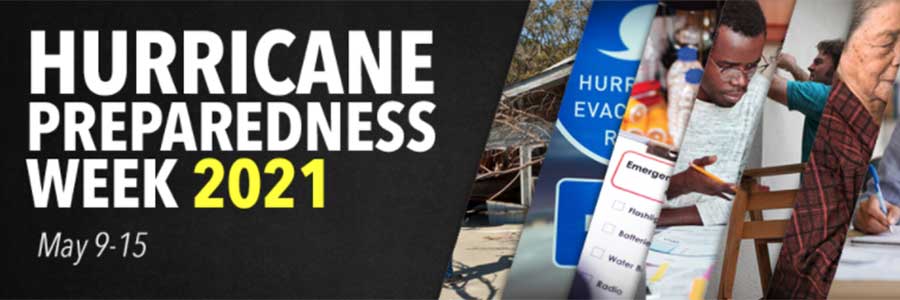
Hurricane Preparedness 2021

Be ready for hurricane season. Today you can determine your personal hurricane risk, find out if you live in a hurricane evacuation zone, and review/update insurance policies. You can also make a list of items to replenish hurricane emergency supplies and start thinking about how you will prepare your home for the coming hurricane season. If you live in hurricane-prone areas, you are encouraged to complete these simple preparations before hurricane season begins on June 1.  Keep in mind, you may need to adjust any preparedness actions based on the latest health and safety guidelines from the CDC and your local officials.


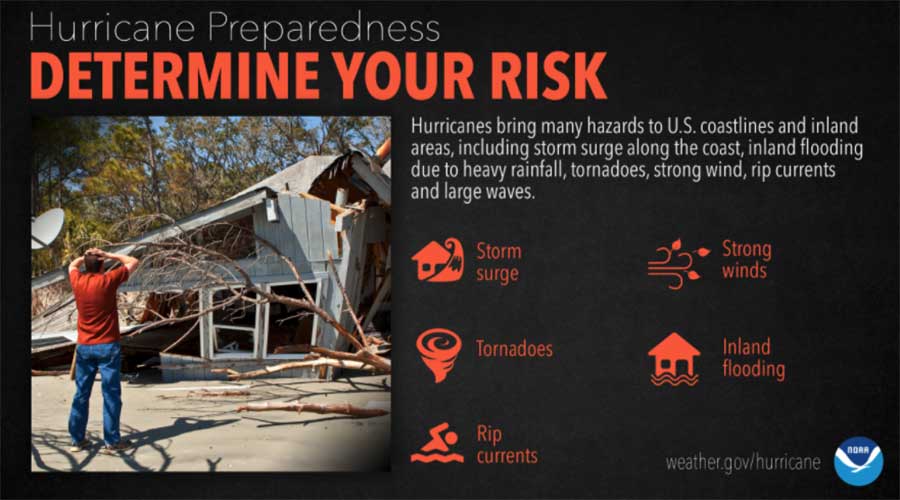
Find out today what types of wind and water hazards could happen where you live, and then start preparing how to handle them. Hurricanes are not just a coastal problem. Their impacts can be felt hundreds of miles inland, and significant impacts can occur without it being a major hurricane.


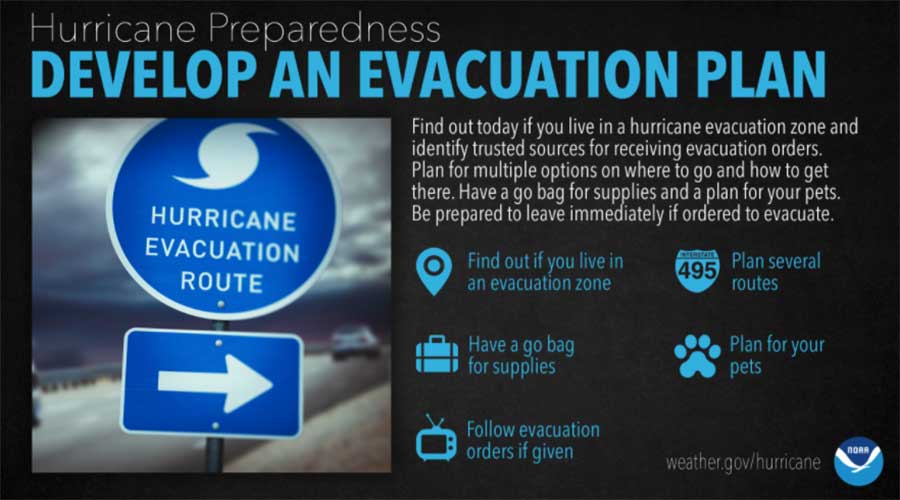
The first thing you need to do is find out if you live in a hurricane evacuation zone.  If you do, now is the time to begin planning where you would go and how you would get there. You do not need to travel hundreds of miles, but have multiple options. Your destination could be a friend or relative who doesn’t live in an evacuation zone.  If you live in a well-built home outside the evacuation zone, your safest place may be to remain home.  Be sure to account for your pets in your plan.  As hurricane season approaches, listen to local officials on questions related to how you may need to adjust any evacuation plans based on the latest health and safety guidelines from the CDC and your local officials.


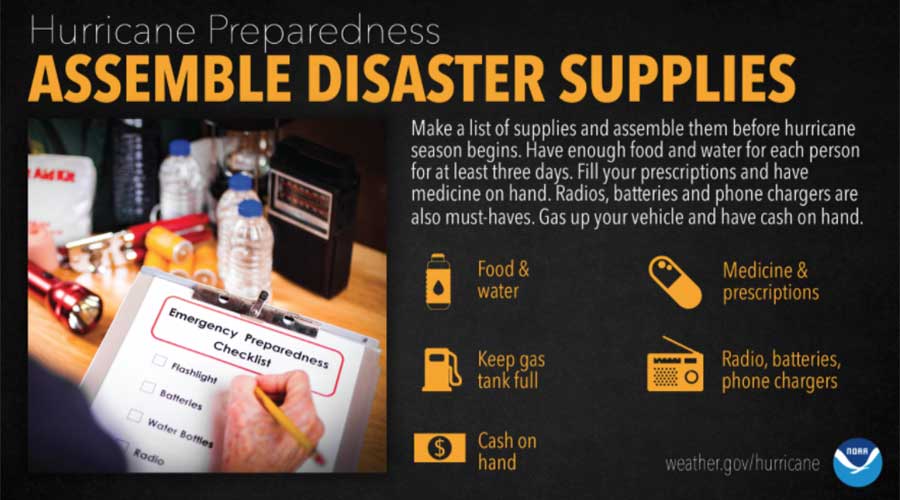
You’re going to need supplies not just to get through the storm but for the potentially lengthy and unpleasant aftermath. Have enough non-perishable food, water and medicine to last each person in your family a minimum of three days. Electricity and water could be out for at least that long. You’ll need extra cash, a battery-powered radio and flashlights. You may need a portable crank or solar-powered USB charger for your cell phones.

If you need to go to a public shelter, the CDC recommends bringing items that can help protect you and others from COVID-19, such as hand sanitizer with at least 60% alcohol, bar or liquid soap, disinfectant wipes (if available) and two masks for each person. (Children under two years old and people having trouble breathing should not wear face coverings.)


Call your insurance company or agent and ask for an insurance check-up to make sure you have enough homeowners insurance to repair or even replace your home. Don’t forget coverage for your car or boat. Remember, standard homeowners insurance doesn’t cover flooding. Whether you’re a homeowner or renter, you’ll need a separate policy for it, and it’s available through your company, agent or the National Flood Insurance Program at floodsmart.gov. Act now as flood insurance requires a 30-day waiting period.


If you plan to ride out the storm in your home, make sure it is in good repair and up to local hurricane building code specifications. Many retrofits are not as costly or time consuming as you may think. Have the proper plywood, steel or aluminum panels to board up the windows and doors. Remember, the garage door is the most vulnerable part of the home, so it must be able to withstand the winds.


Many Americans rely on their neighbors after a disaster, but there are also many ways you can help your neighbors before a hurricane approaches. Learn about all the different actions you and your neighbors can take to prepare and recover from the hazards associated with hurricanes. Start the conversation now with these Neighbor Helping Neighbor strategies but remember you may need to adjust your preparedness plans based on the latest health and safety guidelines from the CDC and your local officials.


The time to prepare for a hurricane is before the season begins, when you have the time and are not under pressure. If you wait until a hurricane is on your doorstep, the odds are that you will be under duress and will make the wrong decisions. Take the time now to write down your hurricane plan. Know who issues evacuation orders for your area, determine locations on where you will ride out the storm, and start to get your supplies now.  Being prepared before a hurricane threatens makes you resilient to the hurricane impacts of wind and water. It will mean the difference between being a hurricane victim or a hurricane survivor.

By |2024-01-14T21:41:37-06:00May 6th, 2021|

Winter Is Coming!

COLD WEATHER IS COMING!

WHAT ARE FREEZING TEMPERATURES?

When approaching winter in Texas, it can be uneventful as our winters tend to be somewhat mild in our area. Nevertheless, we do still have the chance of a detrimental cold front and we must be prepared. When talking about winter with Inframark, we take the WHAT, WHEN, WHERE and HOW approach on our facilities. So, what are freezing temperatures?
Technically freezing temperatures are when the air reaches 32 degrees Fahrenheit. However, it is typically uncommon to see damage to pipes or facilities if the temperature
drops down to 32 degrees and doesn’t stay there for a long period of time. When the temperature reaches 30 degrees or below and stays for just a few hours, it can cause the
pipes to freeze, damage irrigation equipment and cause control failures at many different levels. Additionally, there can be latent damage which doesn’t show immediately. An
example of this would be galvanized pipes. While the pipe may not burst, expansion can occur separating the galvanizing from the pipe creating an area for corrosion to start and
ultimately cause leaks.

WHEN DO YOU PREPARE FOR A FREEZE?

That question is probably the hardest to answer in our area. At Inframark, we do an annual freeze protection audit starting in the Fall. We also do periodic checks as winter continues, since it may actually be months before the cold weather makes its way to our area. It is always the best practice to make sure the preventive measures taken are in good condition throughout the winter. With preparations in place and a cold front approaching, the weather should be monitored regularly to determine arrival time, anticipated temperatures and duration of temperatures below freezing.

WHERE SHOULD WE HAVE FREEZE PROTECTION?

This is the easiest question, everywhere! We don’t believe you can prepare enough for a winter freeze. The potential loss and damage due to a freeze can be extremely costly. Your outside spigots should be covered and insulated along with any other pipes directly exposed to freezing temperatures. This also includes pipes in the attic, garden hoses, irrigation lines and irrigation system backflow preventers. The lines outside exposed to the air are the most common areas to see damage. It is not uncommon for our Inframark team to turn the water off to hundreds of broken backflow preventers in the residential communities after a big freeze. Typically, pipes in the home are fairly safe with heaters running.

HOW DO WE PREPARE FOR THE FREEZE?

There are many different methods and materials which can be utilized to make sure you are safe from freeze damage. Some of these are: foam and fiberglass insulation sized for specific pipes and secured with vinyl and plastic tape, prefabricated spigot covers, spray foam insulation, heat tape, heat lamps and portable heaters. Almost all building supply stores have these items, but do not wait until the night before because they are known to sell out. Should supplies be unavailable, one can improvise, such as utilizing towels and duct tape to insulate vulnerable areas. Turning off the water and draining the lines is the most reliable way to prevent freeze damage. This should always be done for backflow preventers and irrigation systems; however, most everyone needs to have potable water inside the house while it is occupied, so turning off the water and draining the lines is not an option. It is also best practice to periodically flush the lines through all fixtures inside the house during a freeze to bring fresh water into all the lines. This will prevent the water from expanding and breaking the pipes during the freeze. Space heaters, heat lamps and heat tape can be used for small areas directly exposed to freezing temperatures, but care should be taken with any device using extension cords.
By |2021-03-06T13:11:01-06:00February 11th, 2021|
Go to Top